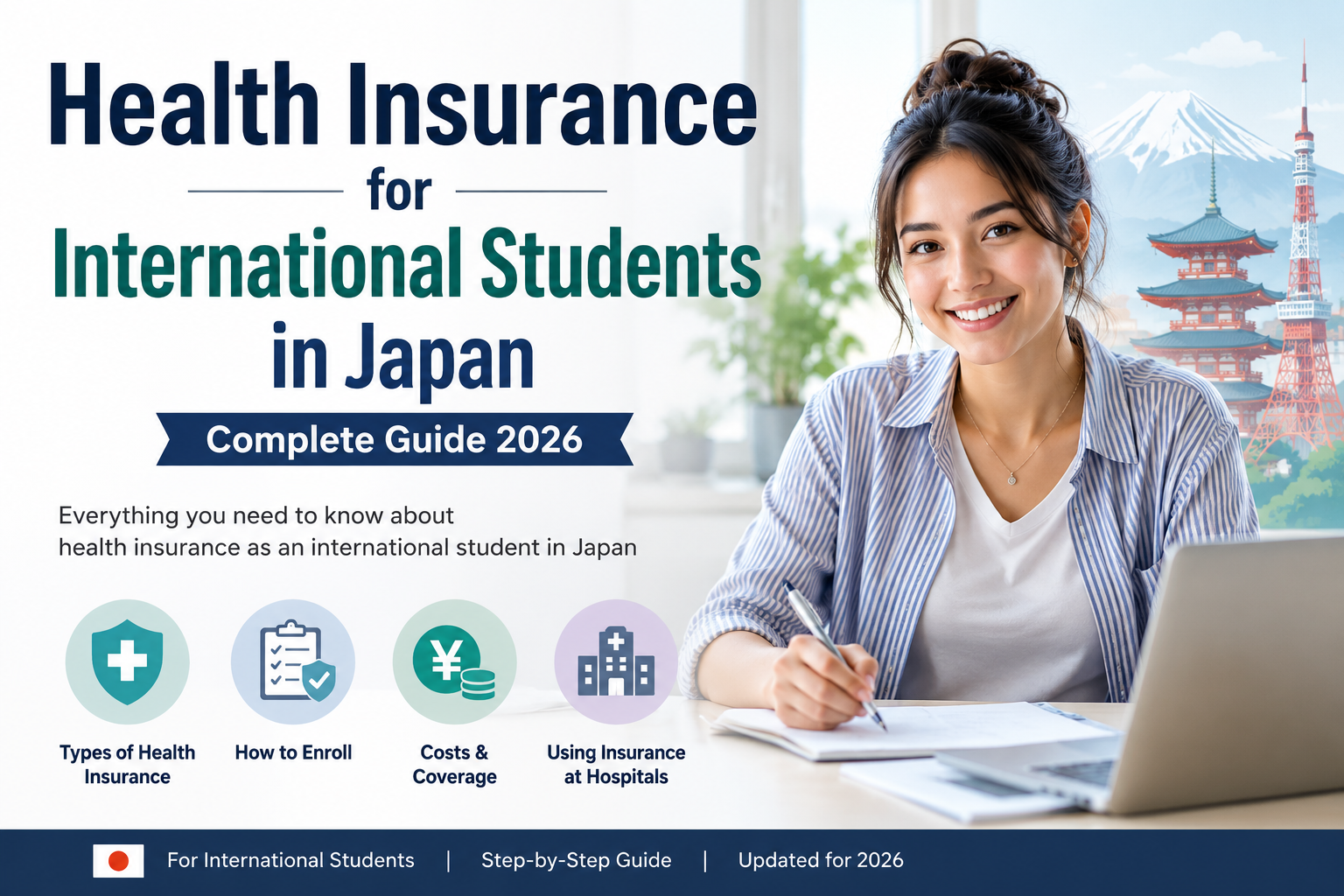
Moving to Japan as an international student is exciting, but understanding the Japanese healthcare system can feel confusing at first. One of the most important things you need to prepare after arriving in Japan is health insurance.
Fortunately, Japan has one of the best healthcare systems in the world, and most international students can access affordable medical treatment through the National Health Insurance system.
This guide explains everything international students need to know about health insurance in Japan, including:
- Whether health insurance is mandatory
- How the Japanese National Health Insurance system works
- Monthly insurance costs
- How much medical treatment actually costs
- Private insurance options
- Emergency medical support
- Common mistakes international students make
Is Health Insurance Mandatory for International Students in Japan?
Yes.
In most cases, international students staying in Japan for more than 3 months are legally required to enroll in Japan’s National Health Insurance system (NHI), known in Japanese as Kokumin Kenko Hoken (国民健康保険).
This rule applies to:
- University students
- Language school students
- Vocational school students
- Exchange students
- Research students
Once you complete your residence registration at your local city office, you are generally expected to enroll in National Health Insurance.
What Is Japan’s National Health Insurance?
Japan’s National Health Insurance system is a public healthcare program that helps residents pay medical expenses.
When you are enrolled, the insurance typically covers:
- Doctor visits
- Hospital treatment
- Surgery
- Prescription medication
- Emergency treatment
- Some dental procedures
In most cases, the insurance pays 70% of eligible medical expenses, while you pay the remaining 30%.
For example:
| Medical Bill | Amount You Pay |
|---|---|
| ¥3,000 | About ¥900 |
| ¥10,000 | About ¥3,000 |
| ¥50,000 | About ¥15,000 |
This makes healthcare in Japan far more affordable compared to countries without universal healthcare systems.
How Much Does National Health Insurance Cost for Students?
The monthly insurance premium for students is usually relatively low because most students have limited income.
Typical student premiums range from:
- ¥1,500 to ¥3,000 per month
However, the exact amount depends on:
- Your city or ward
- Your previous year’s income
- Scholarship status
- Part-time work income
Newly arrived students often pay lower premiums during their first year in Japan.
How to Enroll in National Health Insurance
Enrollment is usually straightforward.
After arriving in Japan, you should:
- Step 1: Register Your Address
- Step 2: Apply for National Health Insurance
- Step 3: Receive Your Insurance Information
- Usually Covered
- Usually NOT Covered
- Emergency Numbers
- Carry Your Insurance Information
- Visit Clinics Instead of Large Hospitals First
- Pharmacies Are Separate
- Learn Basic Medical Japanese
- Is Japanese health insurance good?
- Can international students use hospitals immediately after enrolling?
- Does insurance cover dental treatment?
- Can I use my insurance anywhere in Japan?
- What happens if I forget my insurance card?
Step 1: Register Your Address
Visit your local city office or ward office and register your residence address.
You will receive:
- A residence certificate
- Resident registration
- My Number notification
Step 2: Apply for National Health Insurance
At the same city office, apply for National Health Insurance.
You generally need:
- Residence card
- Passport
- Student ID (sometimes requested)
- Address information
Step 3: Receive Your Insurance Information
Japan has been gradually integrating health insurance information with the My Number system.
Depending on your municipality, you may receive:
- A physical insurance card
- My Number-linked insurance registration
- Instructions for using your insurance at hospitals and clinics
What Medical Expenses Are Covered?
National Health Insurance covers many standard medical treatments.
Usually Covered
- General doctor consultations
- Hospital care
- X-rays and tests
- Prescription medication
- Mental health treatment
- Surgery
- Emergency treatment
- Some dental care
Usually NOT Covered
- Cosmetic surgery
- Preventive health checkups
- Most vaccinations
- Private hospital rooms
- Advanced elective treatments
- Certain orthodontic procedures
Always confirm costs before treatment if you are unsure.
Can International Students Use English-Speaking Hospitals?
Yes, especially in larger cities.
Many hospitals and clinics in major cities offer English support.
Popular student areas such as:
- Tokyo
- Osaka
- Kyoto
- Yokohama
- Fukuoka
have clinics accustomed to treating international residents.
Universities also often provide:
- Campus clinics
- Referral services
- Translation assistance
- Emergency support information
How Expensive Is Medical Treatment in Japan?
Compared with many Western countries, healthcare in Japan is often surprisingly affordable.
Here are rough estimates after insurance coverage:
| Treatment | Estimated Cost After Insurance |
|---|---|
| Basic clinic visit | ¥1,000–¥3,000 |
| Prescription medicine | ¥500–¥2,000 |
| Dental cleaning | ¥2,000–¥5,000 |
| Emergency room visit | ¥5,000–¥15,000 |
| MRI scan | ¥5,000–¥15,000 |
Actual costs vary depending on the treatment and hospital.
What Happens If You Do Not Enroll?
Failing to enroll in National Health Insurance can create serious problems.
Potential consequences include:
- Large medical bills
- Retroactive premium payments
- Difficulty renewing visas
- Problems with residency procedures
If you become seriously ill without insurance, medical expenses can become extremely expensive.
For this reason, students should complete enrollment soon after arriving in Japan.
Do International Students Need Private Health Insurance?
In some cases, yes.
Although National Health Insurance is excellent, some students also purchase private insurance for additional protection.
Private insurance may help cover:
- Emergency evacuation
- Liability coverage
- Personal accidents
- Travel-related emergencies
- Income protection
- Support in English
Some universities also require students to join additional student insurance plans.
Popular Private Insurance Options for Students
Several companies offer insurance products designed for foreigners and international students.
Common providers include:
- Japanese insurance companies
- University co-op insurance plans
- International student insurance providers
- Travel insurance companies
Before choosing private insurance, compare:
- Monthly premiums
- English support availability
- Hospital network
- Emergency assistance
- Coverage limitations
- Mental health coverage
What About Travel Insurance?
Travel insurance is useful during your initial move to Japan, but it is usually not enough for long-term students.
Many travel insurance plans:
- Expire after several months
- Have coverage limits
- Do not fully satisfy Japanese residency expectations
Long-term students should still enroll in National Health Insurance.
Mental Health Support in Japan
Mental health awareness has improved significantly in Japan in recent years.
International students can often access:
- Counseling services
- Psychiatry clinics
- University mental health centers
- English-speaking therapists
National Health Insurance generally covers part of psychiatric and mental health treatment costs.
However, availability of English-speaking specialists may vary depending on the region.
Emergency Medical Services in Japan
Japan has reliable emergency medical services.
Emergency Numbers
| Service | Number |
|---|---|
| Ambulance / Fire | 119 |
| Police | 110 |
Ambulance services in Japan are generally free.
However, hospital treatment itself is not free, which is another reason insurance is essential.
Tips for International Students Using Japanese Healthcare
Carry Your Insurance Information
Always keep your insurance card or My Number-linked insurance information available.
Without proof of insurance, you may need to pay the full amount temporarily.
Visit Clinics Instead of Large Hospitals First
Japan often encourages patients to visit local clinics before going to major hospitals.
Large hospitals may charge additional fees without a referral.
Pharmacies Are Separate
After seeing a doctor, you often receive a prescription that must be filled at a separate pharmacy.
This is normal in Japan.
Learn Basic Medical Japanese
Helpful phrases include:
| English | Japanese |
|---|---|
| I have a fever | Netsu ga arimasu |
| My stomach hurts | Onaka ga itai desu |
| I need a doctor | Isha ga hitsuyo desu |
| Pharmacy | Yakkyoku |
Frequently Asked Questions
Is Japanese health insurance good?
Yes. Japan’s healthcare system is widely considered one of the best in the world due to its affordability, accessibility, and quality.
Can international students use hospitals immediately after enrolling?
Usually yes, once your insurance registration is completed.
Does insurance cover dental treatment?
Some dental treatments are covered, but cosmetic and orthodontic procedures are often excluded.
Can I use my insurance anywhere in Japan?
Generally yes. National Health Insurance can usually be used nationwide.
What happens if I forget my insurance card?
You may need to pay the full medical cost upfront and request reimbursement later.
Final Thoughts
Health insurance is one of the most important parts of student life in Japan.
Fortunately, Japan’s National Health Insurance system makes healthcare relatively affordable and accessible for international students.
Most students pay modest monthly premiums while receiving access to high-quality medical care throughout the country.
After arriving in Japan, make health insurance enrollment one of your top priorities.
It can protect both your health and your finances during your study abroad experience.