If you live in Japan as a foreigner, you may wonder:
- Is National Health Insurance enough?
- Do I really need private insurance on top of it?
- What are the real differences in cost and coverage?
This guide clearly compares Japan’s National Health Insurance (NHI) and private health insurance, so you can decide what is right for your situation—without overpaying or risking gaps in coverage.
- Quick Answer (TL;DR)
- What Is National Health Insurance (NHI) in Japan?
- What Is Private Health Insurance in Japan?
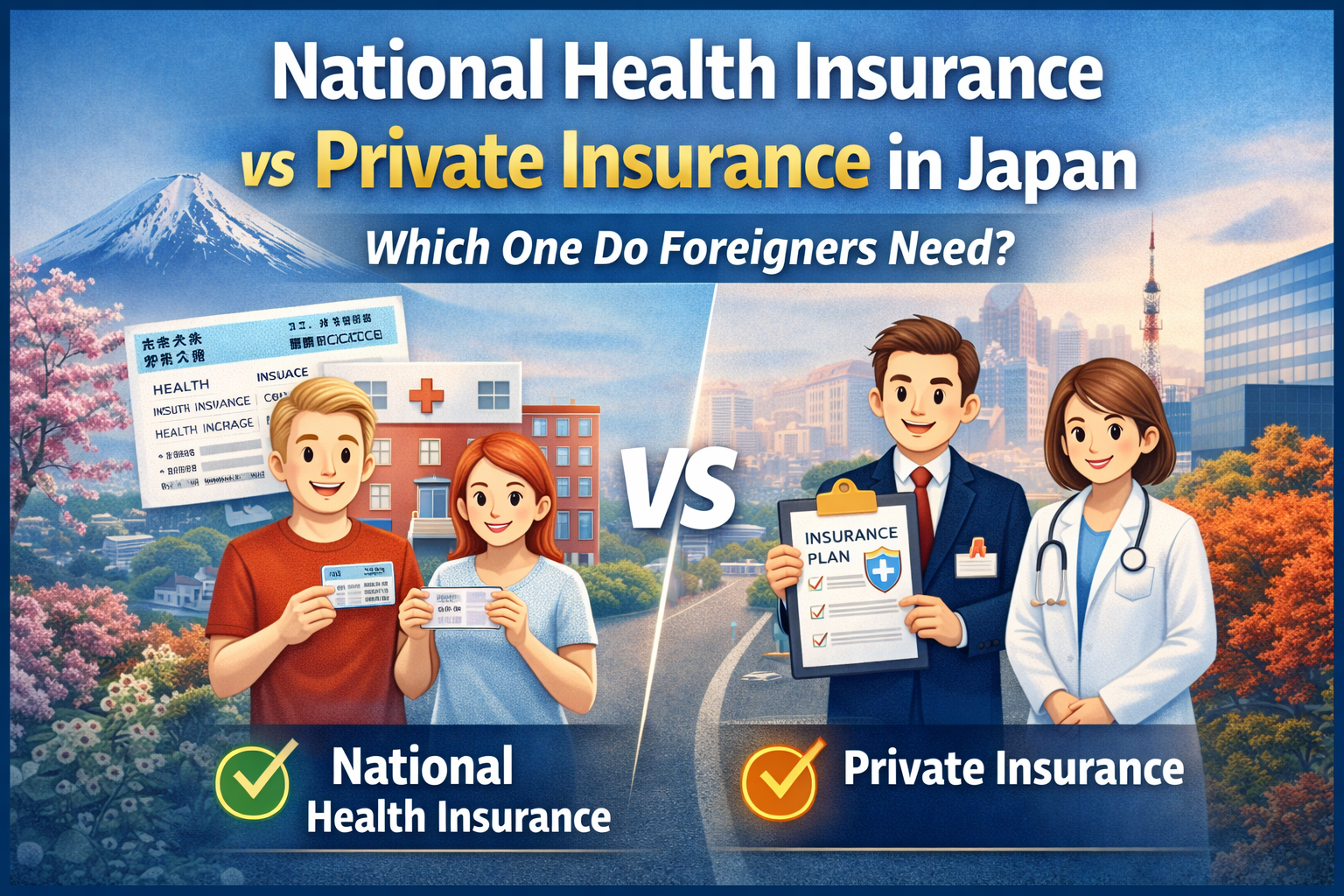
- Side-by-Side Comparison: NHI vs Private Insurance
- Is National Health Insurance Enough?
- Who Should Add Private Insurance to NHI?
- Cost Comparison Example
- Common Myths (Very Important)
- Which Should You Choose?
- Final Recommendation for Foreigners in Japan
- Ready to Compare Insurance Options?
Quick Answer (TL;DR)
- National Health Insurance (NHI) → Mandatory for long-term residents
- Private Health Insurance → Optional but highly recommended
- Best choice for most foreigners → NHI + Private Insurance
Let’s break down why.
What Is National Health Insurance (NHI) in Japan?
National Health Insurance (Kokumin Kenkō Hoken) is Japan’s public insurance system for residents without employer coverage.
Key Features of NHI
- Mandatory for residents staying over 3 months
- Covers about 70% of medical costs
- Managed by local municipalities
- Premiums based on income
👉 Full overview here:
Health Insurance for Foreigners in Japan
What Is Private Health Insurance in Japan?
Private health insurance is optional insurance that supplements public insurance.
It does not replace NHI.
Foreigners typically use private insurance to:
- Cover the remaining 30%
- Access English-speaking support
- Receive cashless treatment
- Reduce financial risk
👉 Detailed guide:
Private Health Insurance in Japan
Side-by-Side Comparison: NHI vs Private Insurance
| Feature | National Health Insurance | Private Health Insurance |
|---|---|---|
| Mandatory | ✅ Yes | ❌ No |
| Covers basic medical care | ✅ | ✅ |
| Covers 70% of costs | ✅ | ❌ |
| Covers remaining 30% | ❌ | ✅ (depending on plan) |
| English support | Limited | ✅ |
| Cashless hospitals | Rare | Common |
| Overseas coverage | ❌ | Sometimes |
| Cost predictability | Medium | High |
Is National Health Insurance Enough?
For basic healthcare, yes.
For peace of mind, often no.
With NHI alone, you may still face:
- Unexpected out-of-pocket payments
- Language barriers at hospitals
- Limited options for private rooms
- No coverage outside Japan
Who Should Add Private Insurance to NHI?
Private insurance is especially useful if you are:
- A long-term foreign resident
- A professional or expat
- A freelancer or self-employed
- Living with family or dependents
- Concerned about large medical bills
If you are staying short-term, NHI does not apply.
In that case, travel insurance for foreigners in Japan is the correct choice.
👉 See:
Travel Insurance for Foreigners in Japan
Cost Comparison Example
With NHI Only
- Doctor visit: ¥10,000 → You pay ~¥3,000
- Surgery: ¥500,000 → You pay ~¥150,000
With NHI + Private Insurance
- Doctor visit: Often fully covered
- Surgery: Out-of-pocket significantly reduced or eliminated
👉 Result: Lower financial risk, higher predictability
Common Myths (Very Important)
❌ “Private insurance replaces NHI”
→ False
❌ “Private insurance is only for rich expats”
→ False
❌ “NHI covers everything”
→ False
Which Should You Choose?
Choose NHI Only If:
- You are young and healthy
- You accept some financial risk
- You are comfortable using Japanese-only services
Choose NHI + Private Insurance If:
- You want English support
- You want predictable costs
- You have dependents
- You want peace of mind
👉 Most foreigners fall into this category.
Final Recommendation for Foreigners in Japan
✔ National Health Insurance is mandatory
✔ Private insurance is optional—but smart
✔ Combining both offers the best protection
To understand how this fits into the full system, start here:
What Insurance Do Foreigners Need in Japan?
Ready to Compare Insurance Options?
Choosing the right coverage now can save you stress—and money—later.
👉 Compare Private Health Insurance Plans for Foreigners in Japan