- Risks, Penalties, and Medical Costs Explained (2026 Guide)
- 1. You Must Pay Full Medical Costs
- National Health Insurance (NHI)
- Public Insurance + Optional Private Insurance
- Can foreigners use Japan’s public healthcare system?
- What happens if I ignore insurance bills?
- Is Japanese healthcare expensive without insurance?
- Can students skip health insurance?
Risks, Penalties, and Medical Costs Explained (2026 Guide)
Many foreigners moving to Japan wonder:
“What happens if I don’t enroll in health insurance?”
Some people assume they can save money by avoiding Japan’s insurance system—especially students, freelancers, or short-term workers.
However, living in Japan without health insurance can create serious financial and legal problems.
In this guide, we explain:
- Whether health insurance is mandatory in Japan
- What happens if foreigners remain uninsured
- Possible penalties and back payments
- Real medical costs without insurance
- Why even healthy foreigners should be covered
If you are planning to live, study, or work in Japan long-term, this article is essential reading.
Is Health Insurance Mandatory in Japan?
Yes.
Foreign residents staying in Japan for more than 3 months are generally required to enroll in either:
- National Health Insurance (NHI / Kokumin Kenko Hoken)
or - Employees’ Health Insurance (Shakai Hoken)
Japan operates under a universal healthcare system, meaning nearly all residents must have health insurance.
Can Foreigners Legally Live in Japan Without Insurance?
In most cases, no.
If you are:
- A student
- A worker
- A freelancer
- A dependent visa holder
- A long-term resident
you are generally expected to join a public insurance system.
What Happens If You Don’t Enroll?
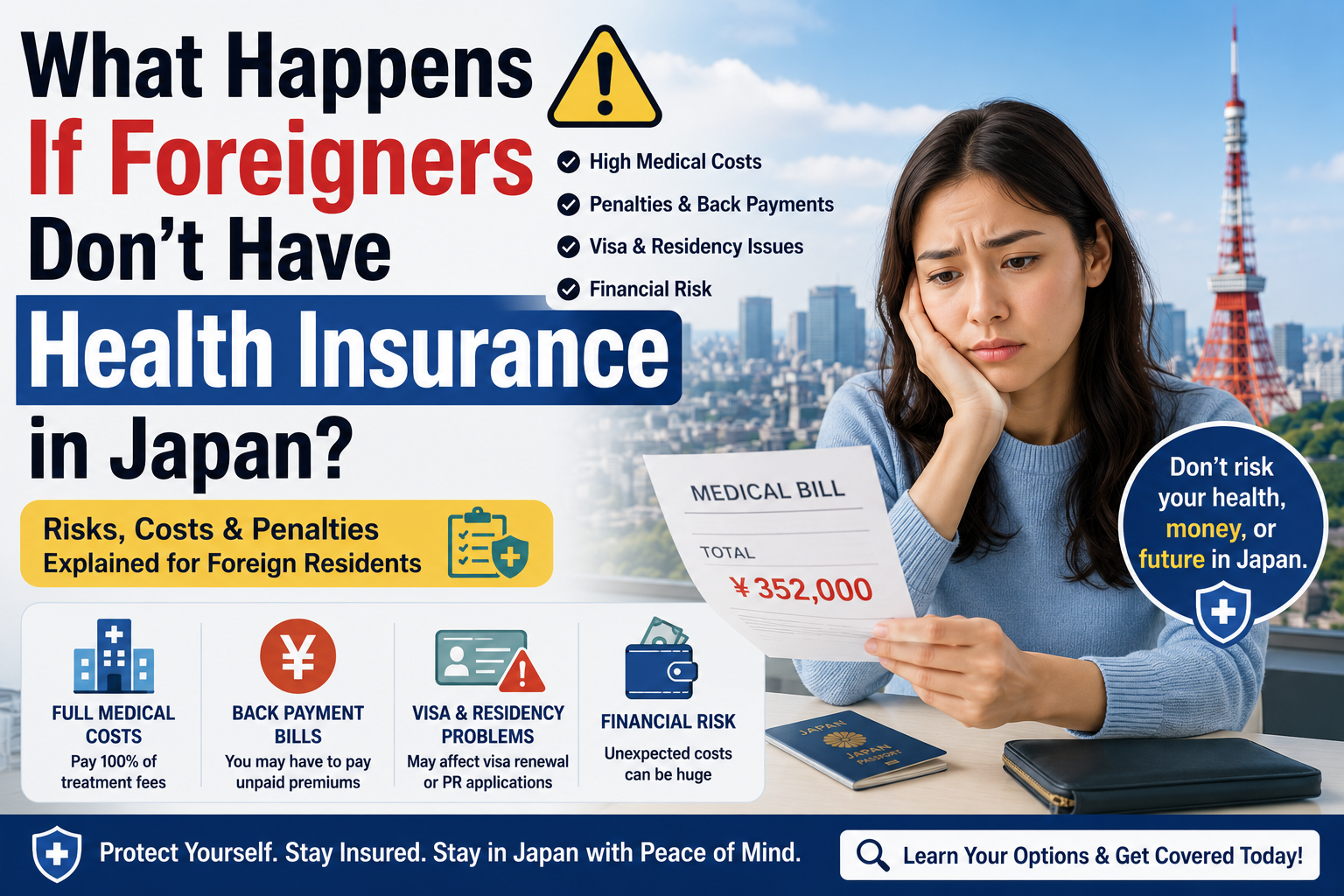
1. You Must Pay Full Medical Costs
This is the biggest risk.
Without insurance, you are responsible for:
- 100% of hospital fees
- 100% of surgery costs
- 100% of prescription medication
- Emergency treatment expenses
Medical bills in Japan can become extremely expensive without insurance coverage.
Example Medical Costs Without Insurance
| Treatment | Approximate Cost Without Insurance |
|---|---|
| Basic clinic visit | ¥5,000–¥15,000 |
| MRI scan | ¥40,000–¥100,000 |
| Emergency room visit | ¥20,000–¥80,000+ |
| Hospitalization | Hundreds of thousands of yen |
| Surgery | ¥500,000+ possible |
Even a single accident or illness can create major financial stress.
2. You May Receive Back Payment Bills
Many foreigners do not realize this.
If local authorities discover you should have been enrolled earlier, you may be required to:
- Enroll immediately
- Pay unpaid premiums retroactively
This can result in a large unexpected bill.
Example of Retroactive Payments
Imagine:
- You lived in Japan for 2 years
- You never joined National Health Insurance
Your city office may later request:
- 2 years of unpaid premiums
- Additional administrative charges
For some residents, this can total hundreds of thousands of yen.
3. Visa and Residency Problems May Occur
Japan increasingly checks whether foreign residents are properly enrolled in:
- Health insurance
- Pension systems
- Tax systems
Missing insurance payments may negatively affect:
- Visa renewals
- Permanent residency applications
- Long-term residency credibility
This is especially important for:
- Work visa holders
- Permanent residency applicants
- Long-term foreign residents
4. Medical Treatment May Become More Stressful
Japan has excellent healthcare—but hospitals generally expect payment ability.
Without insurance:
- Medical procedures become much more expensive
- Emergency situations become financially risky
- Language barriers become even more stressful
For foreigners without savings, even moderate medical treatment can become overwhelming.
Why Some Foreigners Avoid Insurance
Common reasons include:
- Wanting to save money
- Not understanding the system
- Assuming they are healthy
- Believing travel insurance is enough
- Confusion about city office procedures
However, avoiding insurance often creates larger financial risks later.
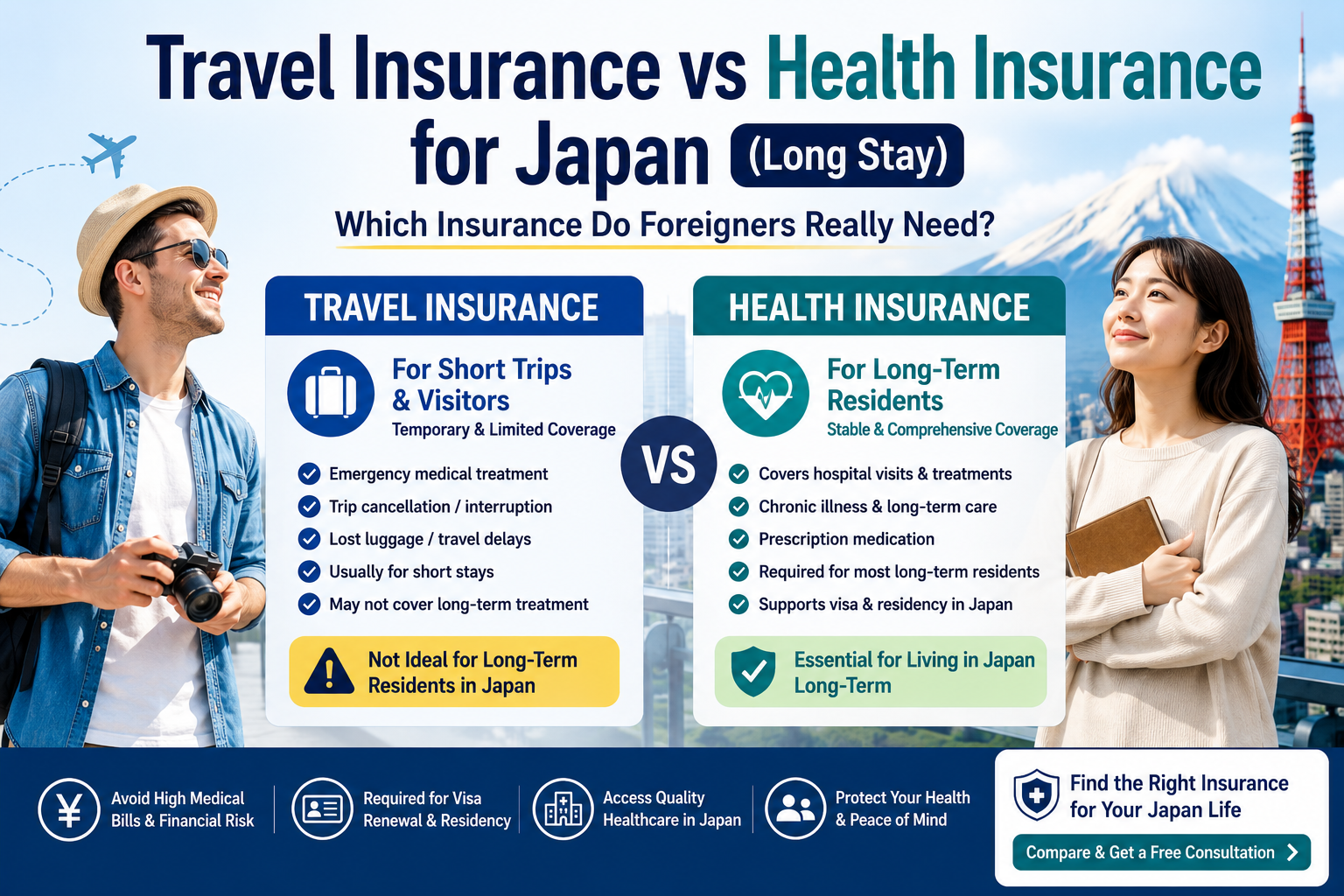
Is Travel Insurance Enough?
Usually not for long-term residents.
Travel insurance may:
- Have limited coverage periods
- Exclude pre-existing conditions
- Not satisfy residency requirements
- Offer weaker long-term protection
If you are living in Japan long-term, public insurance enrollment is typically expected.
What If You Are Self-Employed or Freelancing?
Freelancers and self-employed foreigners usually join:
National Health Insurance (NHI)
You must register through your local city or ward office.
This is a common area where foreigners accidentally remain uninsured due to confusion about procedures.
Can Hospitals Refuse Treatment?
In emergencies, hospitals generally provide treatment.
However:
- Payment responsibility remains yours
- Some clinics may hesitate with uninsured patients
- Large upfront payments may sometimes be requested
Being insured makes the healthcare experience significantly smoother.
Why Private Insurance Is Also Popular
Even foreigners enrolled in public insurance often purchase additional private insurance for:
- Cancer coverage
- Long hospital stays
- Income protection
- International support
- English-language assistance
Public insurance is strong—but not always sufficient for long-term financial security.
Best Insurance Strategy for Foreigners in Japan
For most residents, the safest approach is:
Public Insurance + Optional Private Insurance
This combination helps provide:
- Legal compliance
- Affordable healthcare
- Better financial protection
- Peace of mind during emergencies
Frequently Asked Questions
Can foreigners use Japan’s public healthcare system?
Yes. Legal residents in Japan can usually enroll in public health insurance.
What happens if I ignore insurance bills?
Unpaid premiums may lead to:
- Retroactive charges
- Collection notices
- Residency complications
Is Japanese healthcare expensive without insurance?
Yes. Even ordinary treatment can become expensive without coverage.
Can students skip health insurance?
Generally no. International students are usually required to enroll.
Recommended Next Steps
Before choosing coverage, compare:
- Public insurance requirements
- Private insurance options
- English-language support
- Long-term healthcare costs
- Visa-related obligations
👉 Compare the Best Health Insurance Plans for Foreigners in Japan
👉 Get a Free English Insurance Consultation
(Affiliate CTA placement)
Related Articles
- What Insurance Do Foreigners Need in Japan?
- Health Insurance in Japan for Foreigners
- How Much Does Health Insurance Cost in Japan for Foreigners?
- National Health Insurance vs Private Insurance in Japan
- Best Health Insurance by Visa Type in Japan
Final Thoughts
Living in Japan without health insurance is risky—both financially and legally.
Japan’s healthcare system is excellent and relatively affordable when insured, but medical costs without coverage can become extremely high.
For most foreigners, enrolling in public health insurance is not only required—it is one of the smartest financial decisions you can make while living in Japan.