- Which Insurance Do Foreigners Actually Need? (2026 Guide)
- Quick Comparison
- Sometimes yes.
- Usually no.
- 1. Coverage Expiration
- 2. Chronic Illness Exclusions
- 3. Residency and Visa Issues
- 4. Large Medical Bills
- Japanese Public Insurance + Optional Private Insurance
- Assuming travel insurance covers everything
- Delaying public insurance enrollment
- Choosing insurance only by price
- Can I use travel insurance while studying in Japan?
- Is Japanese health insurance mandatory?
- Does travel insurance cover regular hospital visits?
- Can foreigners buy private insurance in Japan?
Which Insurance Do Foreigners Actually Need? (2026 Guide)
Many foreigners moving to Japan ask the same question:
“Can I just use travel insurance while living in Japan?”
At first glance, travel insurance may seem cheaper and simpler than joining Japan’s public health insurance system.
However, for long-term residents, the difference between travel insurance and health insurance is extremely important.
In this guide, we explain:
- The difference between travel insurance and Japanese health insurance
- Which option is required for long-term stays
- What travel insurance actually covers
- When private insurance makes sense
- The best insurance strategy for expats, students, and workers in Japan
If you plan to stay in Japan for more than a few months, this article can help you avoid serious financial and legal problems.
What Is Travel Insurance?
Travel insurance is temporary insurance designed for:
- Tourists
- Short-term travelers
- Vacation trips
- Business trips
It usually covers:
- Emergency medical treatment
- Trip cancellation
- Lost luggage
- Flight delays
- Emergency evacuation
Travel insurance is primarily intended for short stays abroad.
What Is Health Insurance in Japan?
Health insurance in Japan refers to:
- National Health Insurance (NHI)
or - Employees’ Health Insurance (Shakai Hoken)
These systems are designed for:
- Residents
- Workers
- Students
- Long-term visa holders
Japan’s public health insurance system helps cover:
- Hospital visits
- Surgeries
- Prescription medication
- Long-term medical treatment
Patients generally pay only 30% of covered medical costs.
Main Difference Between Travel Insurance and Health Insurance
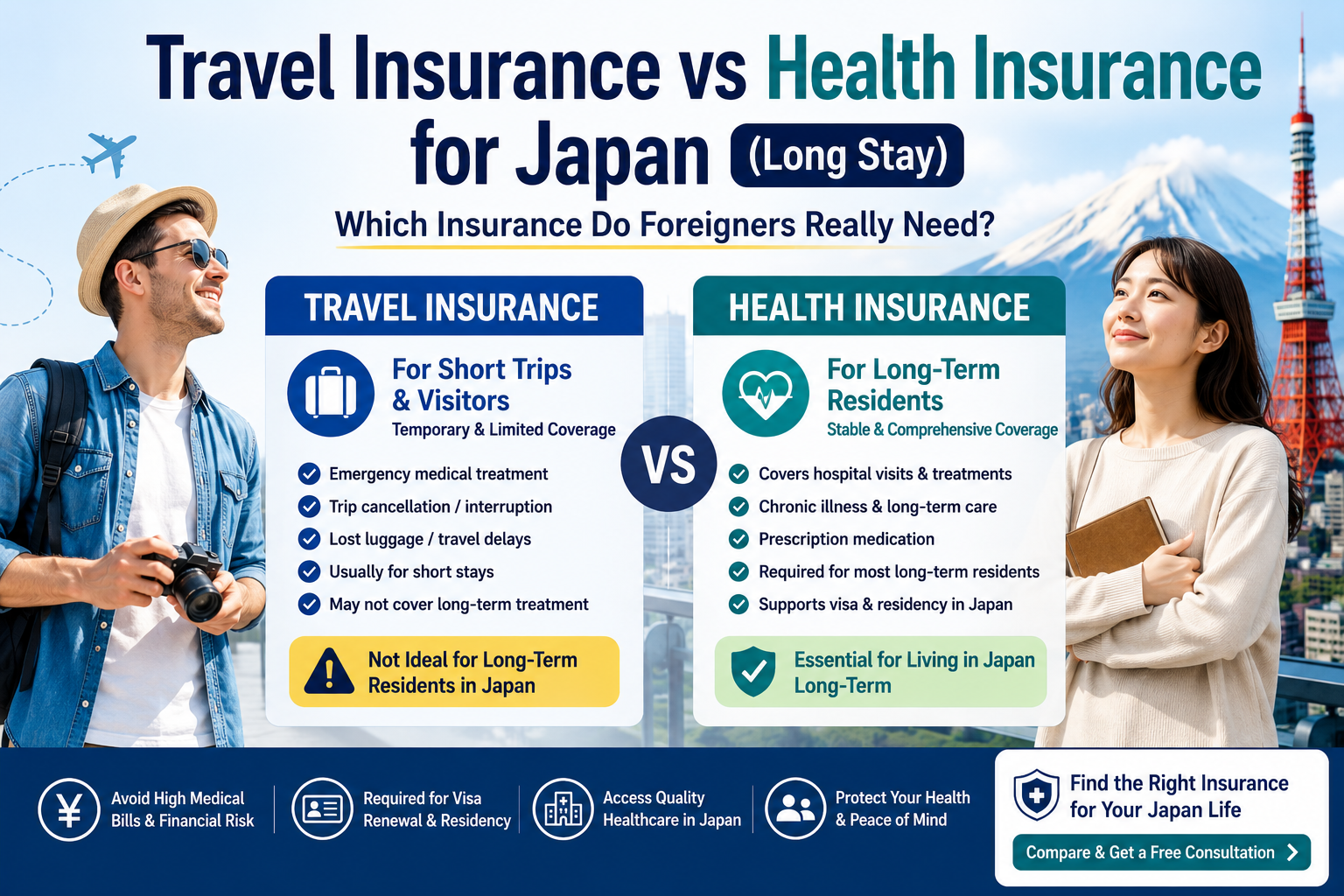
Quick Comparison
| Feature | Travel Insurance | Japanese Health Insurance |
|---|---|---|
| Designed for tourists | Yes | No |
| Designed for residents | No | Yes |
| Long-term coverage | Limited | Yes |
| Covers chronic conditions | Often limited | Yes |
| Required for residents | No | Usually yes |
| Visa compatibility | Limited | Important for residency |
| Monthly premium | Usually fixed | Income/salary-based |
Can Foreigners Use Travel Insurance Instead of Japanese Health Insurance?
For short stays:
Sometimes yes.
For long-term residents:
Usually no.
If you stay in Japan longer than 3 months as a resident, you are generally expected to enroll in Japan’s public insurance system.
This includes:
- Students
- Workers
- Freelancers
- Dependents
- Long-term residents
Why Travel Insurance Is Often Not Enough
This is where many foreigners misunderstand the system.
Travel insurance may:
- Expire after several months
- Exclude long-term treatment
- Reject pre-existing conditions
- Limit hospital choices
- Offer weaker support for residents
Some policies also become invalid if you establish residency in Japan.
Real Problems Long-Term Residents Face With Travel Insurance
1. Coverage Expiration
Many travel insurance policies only last:
- 30 days
- 90 days
- 180 days
Long-term visa holders may suddenly lose protection.
2. Chronic Illness Exclusions
Travel insurance is mainly designed for emergencies—not ongoing care.
Conditions like:
- Diabetes
- Asthma
- Mental health treatment
- Long-term rehabilitation
may not be fully covered.
3. Residency and Visa Issues
Japan increasingly checks:
- Health insurance enrollment
- Pension participation
- Tax compliance
Not joining public insurance may negatively affect:
- Visa renewals
- Permanent residency applications
- Residency credibility
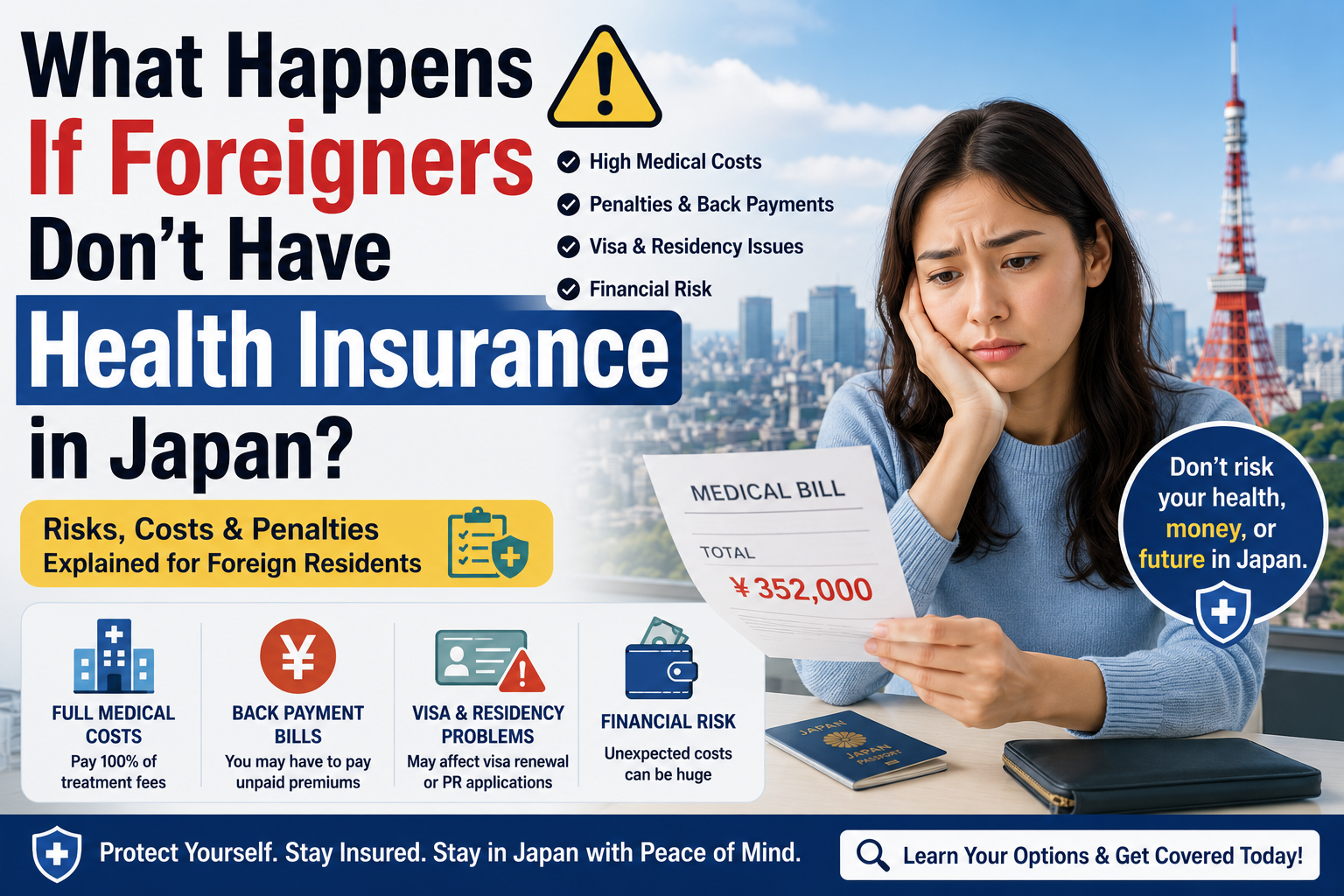
4. Large Medical Bills
Without proper health insurance, foreigners may need to pay:
- Full hospitalization costs
- Expensive surgeries
- Emergency treatment fees
This can become financially overwhelming.
When Travel Insurance Makes Sense in Japan
Travel insurance is still useful for:
- Tourists
- Short-term language school students
- Temporary business trips
- People staying less than 3 months
It can also help cover:
- Emergency evacuation
- Lost baggage
- Travel disruptions
Best Insurance for Long-Term Foreign Residents in Japan
For most long-term residents, the best strategy is:
Japanese Public Insurance + Optional Private Insurance
This combination offers:
- Legal compliance
- Affordable healthcare
- Better financial protection
- Long-term stability
Should You Also Get Private Insurance?
Many foreigners in Japan choose additional private insurance for:
- Cancer coverage
- Income protection
- Long hospital stays
- International medical support
- English-language assistance
This is especially common among:
- Expats
- Professionals
- Families
- Permanent residents
Best Insurance by Visa Type
| Visa Type | Recommended Insurance |
|---|---|
| Tourist | Travel insurance |
| Student visa | Public insurance + optional private |
| Work visa | Shakai Hoken + private insurance |
| Freelancer | National Health Insurance + private |
| Permanent resident | Public + comprehensive private coverage |
How Much Does Japanese Health Insurance Cost?
Typical monthly costs:
| Resident Type | Estimated Monthly Cost |
|---|---|
| Student | ¥1,500–¥3,000 |
| Worker | Salary-based |
| Freelancer | ¥5,000–¥20,000+ |
| Private insurance add-on | ¥2,000–¥8,000+ |
Compared to many countries, Japan’s healthcare system is relatively affordable.
Common Mistakes Foreigners Make
Assuming travel insurance covers everything
It usually does not for long-term residents.
Delaying public insurance enrollment
This may lead to:
- Retroactive premium bills
- Residency complications
Choosing insurance only by price
Cheapest plans often have major limitations.
Frequently Asked Questions
Can I use travel insurance while studying in Japan?
For very short programs, possibly. Long-term students usually need Japanese public insurance.
Is Japanese health insurance mandatory?
For most long-term residents, yes.
Does travel insurance cover regular hospital visits?
Usually not as comprehensively as resident health insurance.
Can foreigners buy private insurance in Japan?
Yes. Many insurers offer plans specifically designed for foreigners and expats.
Recommended Next Steps
Before choosing coverage, compare:
- Duration of stay
- Visa type
- Public insurance obligations
- Private insurance options
- English-language support
- International coverage
👉 Compare the Best Health Insurance Plans for Foreigners in Japan
👉 Get a Free English Insurance Consultation
(Affiliate CTA placement)
Related Articles
- What Insurance Do Foreigners Need in Japan?
- Health Insurance in Japan for Foreigners
- How Much Does Health Insurance Cost in Japan for Foreigners?
- Health Insurance for Working Foreigners in Japan
- What Happens If Foreigners Don’t Have Health Insurance in Japan?
Final Thoughts
Travel insurance and Japanese health insurance serve very different purposes.
Travel insurance is useful for short-term visitors, but it is usually not enough for foreigners planning to live in Japan long-term.
For most residents, enrolling in Japan’s public healthcare system—and adding private coverage when needed—is the safest and most reliable approach.