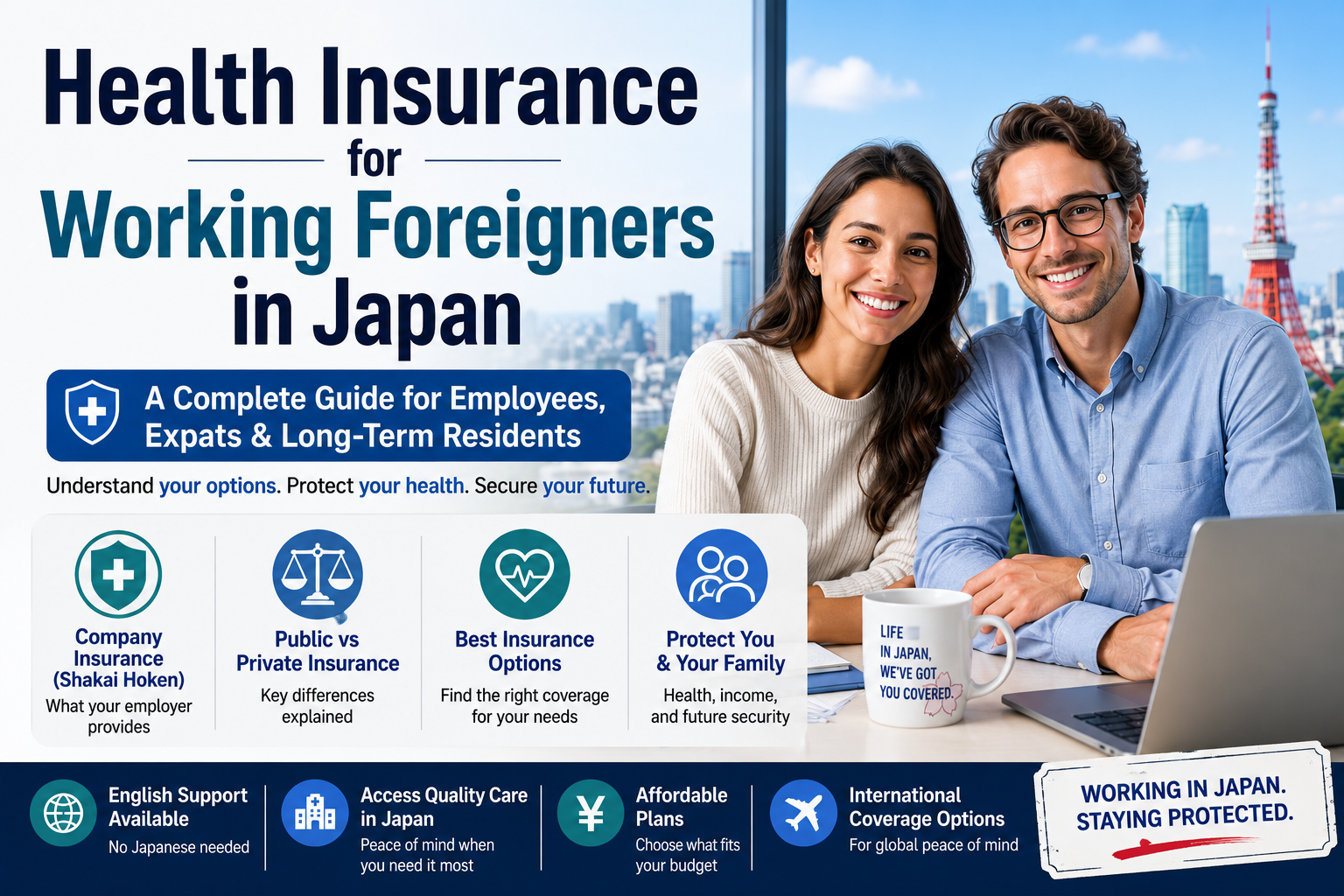
Not every foreign worker in Japan has the same insurance needs. An English teacher on a modest salary, a corporate expat with a family, and a freelance IT contractor all face different tradeoffs when deciding whether — and how — to supplement their public insurance. This guide walks through insurance considerations by work situation, rather than repeating the basics of how public insurance works.
If you haven’t yet, start with our overview of how Employees’ Health Insurance actually works, including enrollment, dependents, and job changes: Health Insurance for Foreign Workers in Japan (Complete Guide)
The Core Question Most Working Foreigners Ask
“Is my company insurance enough, or should I also get private insurance?” For most full-time employees, Shakai Hoken (Employees’ Health Insurance) is solid, mandatory baseline coverage — but it doesn’t fully eliminate financial risk, particularly for extended hospital stays, serious illness, or situations where English-language support matters. Whether it’s “enough” really depends on your specific work situation.
Insurance Considerations by Work Type
English Teachers and Language Instructors
Often on modest, relatively fixed salaries, especially early in their contracts. Basic supplemental private insurance — rather than a comprehensive expat plan — tends to be the more budget-conscious option, focused on covering gaps in hospitalization costs rather than international coverage most teachers don’t need.
IT Workers and Engineers
Often have higher, more stable incomes and may work remotely or travel for work periodically. A private plan with stronger cancer or long-term illness coverage is worth considering, since income disruption from extended treatment can be a bigger financial concern at this income level.
Corporate Expats
Frequently have employer-provided benefits beyond standard Shakai Hoken, sometimes including access to international insurance plans as part of a relocation package. If this applies to you, check exactly what your employer’s package covers before assuming you need to purchase anything separately — international/expat insurance with worldwide coverage and access to international hospitals is most relevant here.
Freelancers and the Self-Employed
Without an employer, freelancers enroll in National Health Insurance (NHI) rather than Shakai Hoken, and don’t have an employer contribution cushioning the cost. Income protection insurance — which helps replace income if illness or injury prevents you from working — is particularly worth considering for sole income earners without a company safety net.
Workers with Families
If you have dependents, the calculus shifts toward comprehensive family coverage rather than an individual plan. Consider whether your dependents would have adequate English-language support and hospitalization coverage under your current setup, since Shakai Hoken dependent coverage mirrors your own base coverage without additional extras.
Types of Private Insurance Worth Knowing About
Basic Private Health Insurance
Best for younger employees, budget-conscious residents, or those new to working in Japan. Typically includes hospitalization benefits, surgery coverage, and emergency care on top of your public insurance.
Cancer Insurance
Notably popular in Japan specifically, since cancer treatment often involves repeated hospital visits, long-term outpatient care, and extended recovery periods that can strain both finances and public coverage limits. Many long-term residents add this as a standalone policy rather than relying on general hospitalization coverage alone.
Income Protection Insurance
Most relevant for freelancers, the self-employed, and sole income earners — this type of coverage helps replace income if illness or injury prevents you from working, a risk employees with paid sick leave are less exposed to.
International / Expat Insurance
Suited to corporate expats, frequent international travelers, and those with family split across countries. Typically offers worldwide coverage, access to international hospital networks, and treatment coverage outside Japan — features most residents who stay within Japan year-round don’t need to pay for.
Common Mistakes Foreign Workers Make
- Assuming public insurance covers everything. It covers about 70% of standard costs — solid, but not unlimited, especially for extended or specialized care.
- Delaying a decision about private insurance. Premiums for many plans increase with age, so waiting isn’t free even if nothing happens to prompt you to act sooner.
- Choosing the cheapest plan without checking exclusions. Low-cost plans may exclude cancer treatment, long hospital stays, or advanced care — read the exclusions, not just the premium.
- Ignoring English-language support as a factor. During an actual medical emergency, language barriers can become a significant source of added stress — this is worth weighing even if it doesn’t affect the sticker price.
How Much Does Private Insurance Cost?
| Age | Estimated Monthly Cost |
|---|---|
| 20s | ¥2,000–¥4,000 |
| 30s | ¥3,000–¥6,000 |
| 40s | ¥5,000–¥8,000 |
| 50s+ | ¥8,000–¥15,000+ |
Actual pricing depends on coverage level, medical history, and family size. For a fuller cost breakdown across both public and private insurance, see: How Much Does Health Insurance Cost in Japan for Foreigners?
Frequently Asked Questions
Do I need different insurance depending on my job type? The public insurance requirement is the same regardless of occupation — what differs is whether and what kind of private supplemental coverage makes sense given your income stability, family situation, and travel patterns.
Should I get insurance recommended by my employer, or shop separately? Both are worth considering. Employer-provided options (especially for corporate expats) can be convenient and sometimes discounted, but comparing against the open market ensures you’re not missing better coverage or value elsewhere.
Is cancer insurance necessary, or is it overkill? It’s optional, not required. It tends to make the most sense for those who want dedicated financial protection against a specific high-cost, high-likelihood risk, rather than general hospitalization coverage alone.
As a freelancer, am I at a disadvantage compared to employees? In terms of cost, somewhat — you don’t have an employer matching your premium. This is part of why income protection insurance is more commonly recommended specifically for freelancers and the self-employed.
Related Guides
- Health Insurance for Foreign Workers in Japan (Complete Guide)
- Is Private Health Insurance Worth It for Work Visa Holders in Japan?
- National Health Insurance vs Private Insurance in Japan
Note: Coverage details, exclusions, and pricing vary significantly by insurance provider and plan. Get a specific quote and read the full policy terms before deciding.